Wednesday, 25 November 2015

A Feline Fable: a guest post by author Sheila Norton

I would like to welcome Sheila Norton to my blog today. Sheila's book Oliver the Cat Who Saved Christmas was published by Ebury Publishing on 22 October 2015. 


A Feline Fable
(or how an old author learned some new tricks)
By Sheila Norton

‘A cat story? Why did you write a cat story?’ somebody asked me when my new book Oliver the Cat Who Saved Christmas was about to be published. The answer was – because I was asked to! True enough, I’d never have thought of writing it if an ex-editor of mine hadn’t contacted me asking if I’d be interested in this project they wanted to commission. All my earlier novels were contemporary women’s fiction. Recently I’d written two books set in the 1960s, and a contemporary novel about grandparents, but an adult Christmas story about cats? Different! Especially as the story was to be narrated by a cat – something which, when I wrote short stories for magazines, was always a definite ‘no’. It reminded me how fashions change in publishing; apparently this was now a new trend.

Despite my surprise, I was very excited by the idea. I’m a cat lover myself – I’d have to be, to even consider it. Although for lifestyle reasons we don’t have cats now, my family have enjoyed the company of three cats over the years and as I started to write Oliver’s story, the memories of their little personalities came flooding back. Oliver had to be a very special cat – one who could understand everything his humans said! But as the story progressed I became convinced that cats probably can understand Human, but to Oliver’s regret, humans never bother to learn Cat! Despite being narrated by a cat, the story is really, like all my novels, about relationships, how people (and animals!) interact and manage their lives.

I can honestly say it was one of the most enjoyable novels I’ve written. But there was a catch – a very tight deadline. For the proposed October publication date, it had to be completed by the 1st July, and it was already towards the end of March when the idea was put to me. But the book didn’t need to be more than 60,000 words – quite short in novel terms – and with a synopsis agreed by the end of the month, I was ready to start work at the beginning of April. Three months: 20,000 words per month. It was doable!

I should probably mention here that I’m not used to working to a deadline. I’m often asked when I give talks, how I schedule my writing work, and the answer has always (up till now) been: I don’t! I was working full-time when my first six novels were published, and my editor was very understanding. She’d ask whether a year was going to be enough, and I’d always agree. I believe it’s important to be an easy author to work with – prima donnas don’t last long in this business. But the year between books gave me plenty of time, working evenings, weekends and days off. I write fast, and those early books hardly needed any research, being about everyday characters with all their laughs, loves and sorrows. Writing was how I relaxed after a day at work, so I didn’t need to discipline myself to do it.

Since retiring from the day job, I’ve had even less need to schedule my writing time, especially as some of the books I’ve written since have been self-published. I don’t have a particular time for writing. 

Some days I do a lot, some days I don’t do any. My 1960s books certainly needed more research than the contemporary ones. I did live through those years, which was my main reason for wanting to write them, but memories aren’t always accurate. Ticket to Ride, which is partly set in Australia and concerns child migrants, needed the most research. I did it as needed during the writing, rather than beforehand, apart from a trip to Australia which was to visit family, but obviously helped with the background!

So it’s been something of a surprise to me to find I actually enjoyed working to such a tight deadline for Oliver, and in fact I finished ahead of time. Of course, I realise I’m in an enviable position now I don’t have the constraints of a day job, but I’ve been there, done that! I also had to plan the story in some detail, as my editor and I needed to be happy with the synopsis before I started. There wouldn’t be time for any really major plot revisions later. This again was a change for me, having usually started with a vague storyline and let the characters lead the way. But the whole process has been so much fun, I’m hoping and planning to repeat it soon with another similar book. Which all just goes to show: you can teach an old dog (or an old author) new tricks. We never stop learning – and should never be afraid to try something different.


About Sheila Norton


Sheila Norton lives near Chelmsford in Essex with her husband, and worked for most of her life as a medical secretary, before retiring early to concentrate on her writing. She has three married daughters, six little grandchildren, and over the years has enjoyed the companionship of three cats and two dogs. Most of Sheila’s previous books have been contemporary relationship novels. She has also had over 100 stories published in women’s magazines and has won awards for her short stories and for one of her novels, 'Yesterday'.

When not working on her writing Sheila enjoys spending time with her family and friends, as well as reading, walking, swimming, photography and travel.

Find Sheila Norton through her website or on Twitter - @NortonSheilaann


Monday, 23 November 2015

Angel Killer by Andrew Mayne

Angel Killer
By Andrew Mayne
Published by Faber & Faber (8 October 2015)
ISBN: 978-0571327607


Publisher's description
Meet Jessica Blackwood, FBI Agent and ex-illusionist.

Called in because of her past to offer expertise on the mysterious 'Warlock' case, Jessica must put all her unique knowledge to the test as the FBI try to catch a ruthless killer.

Needing to solve the unsolvable, and with the clock ticking, they're banking on her being the only one able to see beyond the Warlock's illusions.

The first in a brilliant new series, Angel Killer will have you feverishly turning the pages, and in Jessica Blackwood, Mayne has created a complex, sassy and unforgettable new heroine.

My verdict
Written by real-life magician Andrew Mayne, Angel Killer is an addictive fast-paced read. I loved it from the first page. It's intriguing, fun and something quite different from other crime novels I have read recently.

Special Agent Jessica Blackwood comes from a dynasty of gifted magicians, but gave up the stage in favour of a career in the FBI. When a mysterious killer, named the Warlock, stages crimes using illusions, Jessica is asked to act as consultant in the investigation. With her experience of stage magic and knowledge of law enforcement, Jessica is determined to find the Warlock before the body count rises.

Jessica is a feisty protagonist and I expect her character with develop further as the series continues. Through flashbacks, we delve into her past and discover why she's so determined to escape her family. She has a charming yet disturbing stalker, Damian, an ex-lover who is prepared to protect her by any means. Damian seems to be one step ahead of Jessica, being able to pre-empt the Warlock's next move and leaving Jessica clues to help with her investigation.

This is a book I couldn't put down and one that I won't forget easily. I'm now desperate to read the next in the series.

I received an Advance Reader Copy from the publisher in exchange for an honest review.

Friday, 20 November 2015

My Writing and Publishing Journey: a guest post by Daniel Pembrey

I would like to welcome Daniel Pembrey to my blog today. Daniel's Amsterdam detective series, The Harbour Master, is being published by No Exit Press in 2016.  His pre-Xmas short story - The Lion Hunter - was published on 19 November 2015 and is available from Amazon. 


My Writing and Publishing Journey
By Daniel Pembrey


Thank you for having me Vicki! Please allow me to introduce myself via my new book, which will help me tell you more about my background.

I’ve just released a new, pre-Xmas short story called The Lion Hunter, which was inspired by a combination of Cecil the lion, a recent trip to Tanzania and my re-reading of Hemingway’s African short stories. It’s about a newly married British couple who meet a Texan trophy hunter at a remote game lodge. The lion hunting turns out to be less morally straightforward than the husband expects. It really is short at approximately 40 pages. I loved writing it, and I love the creature it’s based around (I’m a Leo!).

The storytelling process has, for me, been a circular one – involving reading what I love to write, and writing what I love to read. I have always enjoyed thrillers, but I’ve equally appreciated good travel writing. When I visit a place, I relish reading a strong story set there.

I also gravitate towards novellas and short stories. I like nothing more than being gripped by a story during the course of a plane or train journey. And as an author, I feel lucky to be living in an era when there is a viable market for them. (Before e-books, novellas were the realm of Hemingway and perhaps Stephen King; now, with programmes such as Kindle Singles – Amazon’s curated, short e-book programme – they’re flourishing.)

A few years ago, I started visiting Amsterdam; a close sister had moved there with her husband. I was struck by the dearth of crime fiction set in the Dutch capital in English translation. This surprised me because it’s one of northern Europe’s great port cities, lending itself so well to the genre.

I began writing a series of novellas about a stoic Dutch police detective called Henk van der Pol. He was inspired by the maverick cop stories of Michael Connelly and Ian Rankin, not to mention the Scandinavian masters such as the late Henning Mankell. I was fortunate to have the first two books accepted as Kindle Singles. They sold well, the first one becoming the number one short story on Amazon UK, and this in turn got me picked up by a good agent – Kirsty McLachlan at David Godwin Associates.

The very ingredients that had brought me initial success – the novella length e-books, the high-selling Kindle Singles – turned into a headache as my agent began submitting to publishers. While the publishers gave complimentary feedback about the story, they questioned how they could publish collections of novellas as novel-length print books (especially novellas that had already sold as e-books).

This summer, I took part in BritCrime, the online crime writing festival, founded by the wonderful Helen Smith. As well as being tremendous fun, the event created renewed focus on my Harbour Master series among bloggers and readers. Not long after the BritCrime event, my agent received offers from two publishers, one of which was the specialist crime publisher No Exit Press. They looked past the format of the individual books to see one continuous story. The Harbour Master will be re-published next year.

In parallel, I’m continuing with the Kindle Singles programme – namely, The Lion Hunter. And I’m fortunate to have found support in a remarkable man named John Rendall, who walked a lion on London’s King’s Road back in the day! You may have heard of John; he ended up becoming a YouTube phenomenon. For the full story, see here … I’d encourage you to check out the video embedded in the article, it is the most remarkable story of separation and reunion. John Rendall now does amazing conservation work in Africa, helping save species that are otherwise vanishing from in front of our eyes.

What my experience has shown me above all is to pay close attention to what truly enthuses us. For me, that was novella-length tales with themes that I identify with and with a strong sense of location – a hybrid of travel and crime writing, if you will. Those are the stories I love to read, and also the stories I love to write.


About Daniel Pembrey


Daniel grew up in Nottinghamshire beside Sherwood Forest. He has since lived in Edinburgh, Paris, Seattle, Luxembourg, Berlin, Amsterdam and London. Daniel is drawn to psychological suspense stories with a strong sense of location. His Amsterdam detective series, The Harbour Master, will be published by No Exit Press in 2016. Besides reading, writing and traveling, he loves to meet interesting people.

Find Daniel on his website and on Twitter - @DPemb

Find The Lion Hunter on Amazon UK and Amazon.com

Wednesday, 18 November 2015

Mark Twain Said it, Hemingway Bettered It: a guest post by author Paul E. Hardisty

I would like to welcome Paul E. Hardisty to my blog today. Paul's book The Abrupt Physics of Dying was published in paperback by Orenda Books on 8 March 2015.  His next book - The Evolution of Fear - will be published in early 2016.


Mark Twain Said It, Hemingway Bettered It
By Paul E. Hardisty

It was Mark Twain who said: write what you know. Decades later, Hemingway, searching for the truest sentence he knew, bettered it. To EH, the essential question for a writer was: ‘What do I know about and truly care for the most?’ 

It took me ten years to write my debut novel, The Abrupt Physics of Dying. Rather, I wrote it over a period of ten years. The vast majority of that time wasn't spent writing, but working all over the world as an environmental and water resources engineer. Like most of us, I was exchanging time for money, so I could feed and clothe my family, pay the mortgage.

But I was also learning about the world, observing and recording, building knowledge and experience doing something I cared about. Working with the UN, I was lucky enough to go to Yemen, on the Southern edge of the Arabian Peninsula, right after the first Gulf War, and see first hand the effects of war and the mass displacement of people. Over a fifteen year period, I worked and travelled all over the region, and was in Yemen as the 1994 civil war erupted. Those experiences eventually formed the core of my novel.

When I heard that Abrupt Physics had been shortlisted for the prestigious CWA John Creasey New Blood Dagger award for best crime novel or thriller by a new author in 2015, I was stunned. I thought back on the years it took to find an agent, let alone a publisher. I reflected on the dozens of polite, often complimentary and helpful rejections, and the most common reason given for turning me down: ‘It’s just too different’. And I remembered how I felt at the time: saddened that I hadn’t been successful, but at the same time hugely buoyed, because that was exactly what I had been trying for:  something different. Something only I could write, born not only of the things I’d learned and done and seen, but from the deep passion I had developed for social and environmental justice, and the plight of the less fortunate, the disenfranchised, and the voiceless in our world.

And so to the most recent, and in my view devastatingly difficult, variation on Mark Twain’s famous edict, this time from Martin Amis: ‘Write about what you know so you don’t have to write what others already have.’ This is perhaps the hardest part of all, to avoid, as Amis put it, not only ‘clichés of the pen, but also of the mind and heart’. I didn’t win the Dagger, but just getting that far was wonderful affirmation that striving for something different and fresh may be difficult, but it is worth it. 

As I put the finishing edits to my second novel, The Evolution of Fear (out in early 2016), the voices of those masters continue to rattle around my brain like a looping algorithm buried in a dream.  I need to trust my voice, be steadfast in my attempts to integrate science and mathematics into prose and plot in a way that is non-threatening to readers, because, yes, science can be beautiful. I must continue to write about issues that I care about, without that passion taking over the story and becoming polemic. I also have to understand that there is a role for research – not everything you know has to come from first-hand experience. John Updike, after all, famously crammed himself full of several PhDs of research for each novel he wrote. And last, I need to remember that after all, this is fiction. It’s about making stuff up.  So, please, Messieurs Twain, Hemingway and Amis, be patient with a humble engineer who still learning the craft of writing, and has a long way to go.


About Paul E. Hardisty


Canadian by birth, Paul Hardisty has spent 25 years working all over the world as an engineer, hydrologist and environmental scientist. He has roughnecked on oil rigs in Texas, explored for gold in the Arctic, mapped geology in Eastern Turkey (where he was befriended by PKK rebels), and rehabilitated water wells in the wilds of Africa. He was in Ethiopia in 1991 as the Mengistu regime fell, and was bumped from one of the last flights out of Addis Ababa by bureaucrats and their families fleeing the rebels. In 1993 he survived a bomb blast in a café in Sana’a, and was one of the last Westerners out of Yemen before the outbreak of the 1994 civil war. Paul is a university professor and Director of Australia’s national land, water, ecosystems and climate adaptation research programmes. He is a sailor, a private pilot, keen outdoorsman, conservation volunteer, and lives in Western Australia with his family.

Follow Paul E. Hardisty on Twitter - @Hardisty_Paul

Tuesday, 17 November 2015

Colour Me Mindful Seasons

Colour Me Mindful Seasons
By Anastasia Catris
Published by Orion (24 September 2015)
ISBN: 978-1409163732


My verdict
Colour Me Mindful Seasons measures 17cm x 17cm,  so it's much smaller than many of the other adult colouring books on the market. But its portability makes it the perfect size for travel and a useful addition to any collection of larger adult colouring books.

The book may be petite, but there are still plenty of pictures packed into its double-sided pages. As expected from the title, the pictures have a seasons theme, symbolising Spring, Summer, Autumn and Winter. The varied topics include the Chinese New Year, Easter, summer holidays, Halloween and Christmas.


Each picture is beautifully drawn with some tiny details. This does mean that you need good eyes (or, if not, a magnifying glass) to do some of the colouring. You also need some very sharp pencils or pens with a very fine nib.

I used WHSmith colour pencils, which blend well and come in a range of colours.


I also used a mixture of Staedtler triplus colour pens, Staedtler Fineliners, Stabilo point88 pens and Uni-ball Signo Sparkling Gel Ink Rollerball pens. None of the pens could be seen through the page.


(Work in Progress)

I received a copy from the publisher in exchange for an honest review.

Monday, 16 November 2015

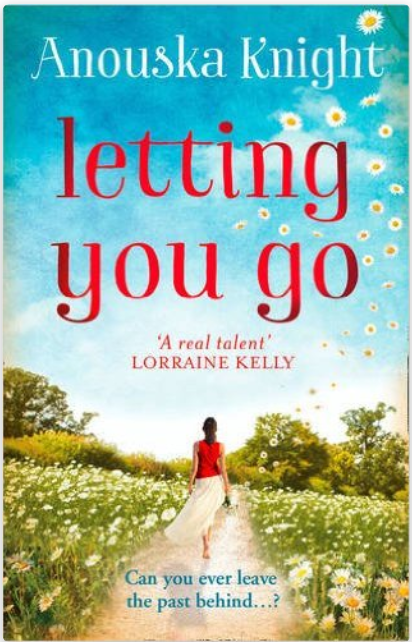
Letting You Go by Anouska Knight

Letting You Go
By Anouska Knight
Published by Mira (10 September 2015)
ISBN: 978-1848454262


Publisher's description
Alex Foster lives a quiet life, avoiding the home she hasn’t visited in eight years. Then her sister Jaime calls. Their mother is sick, and Alex must return. Suddenly she’s plunged back into the past she’s been trying to escape.
Returning to her hometown, memories of the tragic accident that has haunted her and her family are impossible to ignore. Alex still blames herself for what happened to her brother and it’s soon clear that her father holds her responsible too. As Alex struggles to cope, can she ever escape the ghosts of the past?

My verdict
Letting You Go is a book filled with family secrets, love and romance, regrets and feuds.

A tragic accident tore Alex Foster's family apart when she was a teenager. She left the family home soon afterwards, cutting herself off from her family and Finn, the love of her life. But now that her mother is ill, she is forced to return home and come to terms with her guilt. But is she really the one who needs the forgiveness?

It took me a little while to get into this book but then I couldn't put it down. It's well written and easy to read. I think it just took a little while to engage with Alex at first, but her character developed as the book progressed. It reads as chick lit, but the story itself is darker and more in-depth.

Letting You Go is a very moving book and I did shed a few tears at the end.

I received an Advance Reader Copy from the publisher in exchange for an honest review.

Friday, 13 November 2015

'What is writing to me?': A feature by author Louise Beech

World Diabetes Day takes place every year on 14 November. 

I would like to welcome Louise Beech to my blog today. Louise's book How to be Brave was published by Orenda Books on 17 September 2015. Her book is a powerful story based on her experience with her own daughter's diagnosis of Type 1 Diabetes and the true story of her grandfather, Colin.


What is writing to me?
By Louise Beech


I read an interview once where the writer was asked, What is writing to you?  Naturally, I wondered the same.  What is writing to me?  Because really it’s such a personal thing, and means different things to different people.  For some folks, writing might be a hobby, a light pleasure.  For some, it might just be a job.  For others, escape, adventure, even therapy.  I think for me, it is definitely the latter.

And those three things came into play in a big way while I was writing the first draft of How to be Brave, my debut novel; because I approached such a hugely personal topic, one that I had never explored until then in great depth.  My daughter Katy’s Type 1 Diabetes diagnosis when she was seven.  And with World Diabetes Day on 14th November, it is very much on my mind again.

It was a horrible time.  That five-word sentence does little to explain how horrible.  But hopefully the novel manages to.  In it, I created fictional mum and daughter - Rose and Natalie - who are going through such a diagnosis.  Type 1 is a much-misunderstood condition, one often confused with Type 2, which sometimes (but not always) can be caused by a poor diet.  Type 1 Diabetes is never caused by the person eating too much sugar - it’s an autoimmune disease, where the immune system attacks the pancreas and the cells that make insulin.  Injections are needed every day, forever.

But while I wanted to inspire and even educate, I didn’t want to bore readers with medical jargon or an overload of information, so I let Rose and Natalie tell their own story, in a book nook where they cope with multiple injections by bringing to life a long-gone ancestor.  Grandad Colin’s true sea survival runs parallel to their daily struggle, the two stories often very similar.  First and foremos,t I wanted the book to be an adventure, a magical tale of bravery and love.

While writing the first draft, I had a rigid routine with regards to the time I gave to it - five hours a day, every day except Sunday. But when it came to the structure of my words, I was less orderly.  I let them come as they must.  Fall into the white screen in a tumble of tears.  Yes, I cried a great deal, reliving pain I’d ignored for a long time.  Once it was out, I went back and harshly edited, sculpting and chipping away until I was happy with my work.

Writing is as much about editing as anything else.  I think the first draft is like the undercoat we use when decorating.  It’s needed in order for the later colours to shine best.

When thinking more about that interviewer’s question - what is writing to you? - it also occurred to me that I’m reaching out in my writing.  Saying all the things I’m not very good at saying; because I don’t explain very well or I’m too tongue-tied and nervous or get muddled with how I want to say it.  I was choked up when I wrote How to be Brave, filled with emotion.  But I was never tongue-tied, never got lost.  I realised it was an expression of love for my daughter, and that I should share it. 

So I did. 

Because I suppose it’s how I’m reaching out.  By writing.  It’s a way to be heard.  That’s what writing is.  It’s quiet, simple, and easy to me - and it’s so much louder than any shouts or screams or arguments or cries.  People listen when you write.  And you understand yourself better too.  Isn’t that the best reason ever to sit down at an empty screen?

So on World Diabetes Day, I’m hoping that How to be Brave might touch, inspire, educate or help another child going through a Type 1 diagnosis - or a parent having to witness it.  I hope I have written for you all, and written well.


About Louise Beech (pictured below with her daughter Katie)


Louise Beech has always been haunted by the sea, and regularly writes travel pieces for the Hull Daily Mail, where she was a columnist for ten years. Her short fiction has won the Glass Woman Prize, the Eric Hoffer Award for Prose, and the Aesthetica Creative Works competition, as well as shortlisting for the Bridport Prize twice and being published in a variety of UK magazines. Louise lives with her husband and children on the outskirts of Hull – the UK’s 2017 City of Culture – and loves her job as a Front of House Usher at Hull Truck Theatre, where her first play was performed in 2012. She is also part of the Mums’ Army on Lizzie and Carl’s BBC Radio Humberside Breakfast Show.

Follow Louise Beech on Twitter - @LouiseWriter 


If you would like to learn more about diabetes, please visit the Diabetes UK website.